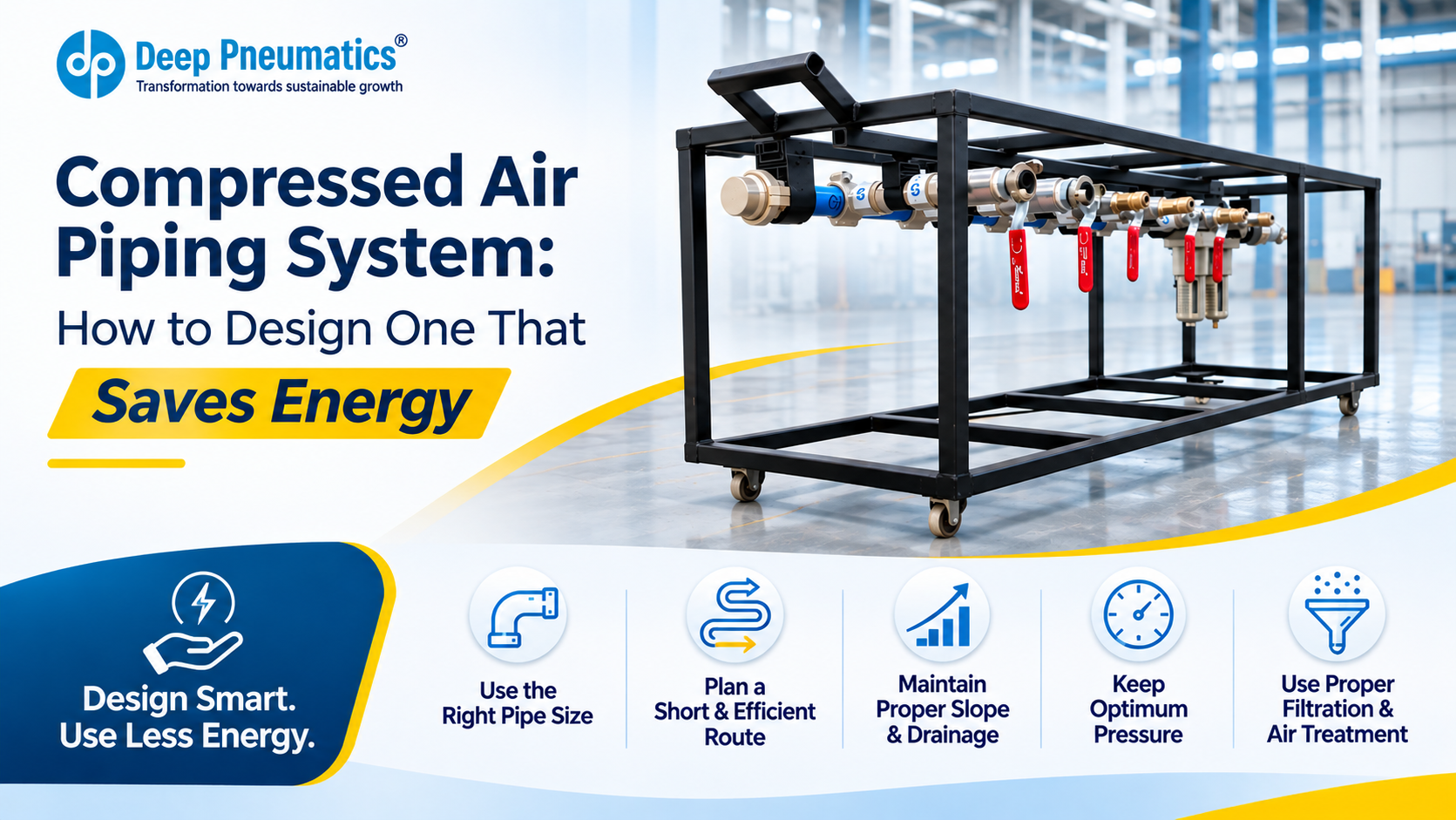
You can buy the best compressor on the market and still lose performance. The culprit is often the piping. Undersized pipes, sharp bends, and long dead ends quietly eat pressure and power. A well-planned compressed air piping system does the opposite. It delivers steady pressure to every machine.
In this guide, we explain how to choose pipe material, how to lay out the network, and which mistakes to avoid. Whether you are building a new plant or upgrading an old one, these basics will help you save energy from day one.
Why Your Piping Matters More Than You Think
Every metre of pipe, every bend, and every valve resists the flow of air. That resistance causes a pressure drop. As a result, the pressure at your machine ends up lower than the pressure at your compressor.
Most plants fix this problem the wrong way. They raise the compressor pressure to compensate. However, each extra 1 bar adds roughly 6 to 7 percent to your energy use. Moreover, higher pressure increases leakage. Good piping removes the need for this costly workaround.
Choosing the Right Pipe Material
Aluminium Piping
Aluminium is widely used in modern industrial facilities for its many benefits. It is light, so installation is quick. It does not rust, so the air stays clean inside the pipe. In addition, its smooth bore keeps pressure drop low. You can also extend or modify the network easily when your plant grows.
Stainless Steel Piping
Stainless steel suits food, beverage, and pharmaceutical plants, where clean air is critical. It resists corrosion and handles tough environments well. However, it costs more than other options. Most plants therefore use it only where purity demands it.
Galvanised and Black Steel Piping
Steel pipe is the traditional choice, and it still has a place. The upfront cost is lower. Over time, however, steel corrodes on the inside. Rust flakes then travel downstream and damage tools, valves, and products. Threaded joints can also develop leaks as they age.
A Word of Caution on Plastic
Never use ordinary plastic pipe such as PVC for compressed air. It can crack and shatter under pressure, which creates a serious safety risk. If you want a non-metal option, choose only products that the manufacturer approves for compressed air.
Key Design Principles for an Efficient Network
A few simple rules separate an efficient network from a wasteful one. Keep these in mind during planning:
- Size for flow and growth: Choose a diameter that keeps pressure drop low, and leave room for future machines
- Use a ring main where possible: A loop feeds each machine from two directions, so pressure stays steadier during demand peaks
- Slope the pipe gently: A slight fall toward drain points helps condensate collect where you can remove it
- Take branches from the top: A top take-off stops water from running into your tools
- Fit drain legs and automatic drains: Place them at low points and at the end of long runs
- Reduce bends and fittings: Each elbow adds resistance, so use gentle curves and short runs
- Add isolation valves: They let you shut off one section for repairs without stopping the whole plant
Many designers aim for a total pressure drop of about 0.5 bar or less between the receiver and the farthest point of use. Treat that as a practical target. Then ask your supplier to calculate the actual figure for your layout.
Common Piping Mistakes to Avoid
- Using identical pipe sizes for the main line and branch connections.
- Building long dead-end runs that starve the last machine
- Skipping drain points, so water collects in low spots
- Mixing pipe materials and creating weak joints
- Ignoring future expansion until the plant outgrows the network
- Commissioning the system without a proper leak test
Each of these mistakes looks small. Together, however, they can waste a lot of energy every month. In addition, they make maintenance harder for your team.
Treat the Air Before It Enters the Pipe
Even the best piping cannot fix wet or dirty air. Therefore, place your dryer and filters ahead of the main distribution line. Clean and moisture-free air helps protect pipelines and connected equipment. Moreover, it keeps corrosion and condensate problems away from your network.
Conclusion
A smart compressed air piping system protects pressure, saves energy, and cuts maintenance. It also grows with your business. Deep Pneumatics offers air piping solutions along with compressors, dryers, and filters, so you can plan the whole system with one trusted partner. Contact our team today for a free layout review and system recommendation.